
Introduction
Proper car storage is one of the most effective ways to preserve vehicle condition, maintain long term performance, and reduce costly repairs. Whether storing a vehicle for a few weeks, several months, or an extended period, taking the right precautions can significantly protect both the mechanical systems and exterior appearance of the automobile.
Vehicles exposed to harsh weather, moisture, dirt, sunlight, and long periods of inactivity may develop serious problems over time. Common issues include battery failure, tire damage, rust formation, interior deterioration, fluid contamination, and engine complications. Proper storage methods help reduce these risks while extending the lifespan of critical vehicle components.
Modern vehicles contain advanced electrical systems, sensitive materials, and complex mechanical parts that require careful maintenance even during periods of nonuse. Car owners who understand the importance of storage preparation are often better able to protect their investments and maintain higher vehicle value over time.
As seasonal vehicle ownership, classic car collections, and long term travel become increasingly common, effective car storage practices have become an important part of responsible vehicle maintenance.
Why Proper Car Storage Matters
Vehicles are designed for regular operation. When left unused for extended periods without preparation, several systems may begin to deteriorate.
Proper car storage helps:
- Protect vehicle paint and bodywork
- Prevent rust and corrosion
- Maintain battery health
- Reduce tire damage
- Preserve engine condition
- Protect interior materials
- Maintain resale value
Good storage practices reduce long term maintenance costs and improve vehicle reliability.
Common Problems Caused by Improper Car Storage
Battery Drain
Modern vehicles continue drawing small amounts of electrical power even when turned off.
Extended inactivity may lead to:
- Dead batteries
- Reduced battery lifespan
- Electrical system issues
Battery maintenance becomes especially important during long term storage.
Tire Flat Spots
Vehicles left stationary for long periods may develop flat spots on tires due to constant pressure in one position.
This can lead to:
- Uneven tire wear
- Vibrations during driving
- Reduced tire lifespan
Proper tire care helps prevent these problems.
Fuel System Degradation
Fuel can deteriorate over time, especially when exposed to moisture and air.
Old fuel may cause:
- Engine starting problems
- Fuel injector issues
- Reduced engine performance
Fuel stabilization helps protect the fuel system during storage.
Rust and Corrosion
Moisture exposure is one of the biggest threats to stored vehicles.
Rust commonly affects:
- Undercarriage components
- Brake systems
- Exhaust systems
- Body panels
Climate controlled storage environments significantly reduce corrosion risks.
Interior Damage
Heat, humidity, and sunlight can damage vehicle interiors over time.
Potential issues include:
- Cracked dashboards
- Faded upholstery
- Mold growth
- Leather deterioration
Interior protection is essential for preserving vehicle appearance and comfort.
Types of Car Storage
Indoor Garage Storage
Indoor garages provide one of the safest environments for vehicle storage.
Benefits include:
- Protection from weather
- Reduced sunlight exposure
- Improved security
- Lower moisture exposure
Climate controlled garages offer even greater protection for valuable or classic vehicles.
Outdoor Storage
Outdoor storage may be necessary when indoor space is unavailable.
Drivers using outdoor storage should consider:
- High quality car covers
- Weather protection
- Tire maintenance
- Frequent inspections
Outdoor storage exposes vehicles to greater environmental risks.
Climate Controlled Storage
Climate controlled facilities maintain stable temperature and humidity levels.
These environments help protect:
- Paint quality
- Interior materials
- Electronic systems
- Rubber components
Climate controlled storage is ideal for luxury, collectible, and seasonal vehicles.
Preparing a Vehicle for Long Term Storage
Clean the Vehicle Thoroughly
A clean vehicle is less likely to develop rust, stains, or surface damage during storage.
Important cleaning steps include:
- Washing the exterior
- Removing dirt and road salt
- Cleaning wheel wells
- Vacuuming the interior
- Removing food and trash
Contaminants left on surfaces may cause corrosion or odors over time.
Apply Paint Protection
Wax or paint sealants provide additional protection against moisture and environmental exposure.
Protective coatings help:
- Prevent oxidation
- Preserve paint shine
- Reduce dirt buildup
Paint protection is especially important for outdoor storage.
Change Engine Oil
Used engine oil may contain contaminants and moisture that can damage engine components during storage.
Fresh oil helps:
- Protect internal engine parts
- Reduce corrosion
- Improve lubrication during restart
Oil changes are recommended before extended storage periods.
Fill the Fuel Tank
A full fuel tank reduces air space inside the tank, minimizing moisture buildup and fuel oxidation.
Drivers should also consider adding:
- Fuel stabilizers
- Moisture reducing additives
These products help preserve fuel quality during inactivity.
Disconnect or Maintain the Battery
Battery maintenance is critical for long term storage.
Options include:
- Disconnecting the battery
- Using a battery maintainer
- Installing a trickle charger
These methods help prevent battery discharge and extend battery life.
Protecting Tires During Storage
Tires can deteriorate when vehicles remain stationary for long periods.
Maintain Proper Tire Pressure
Underinflated tires are more likely to develop flat spots and structural damage.
Drivers should check and maintain manufacturer recommended tire pressure levels.
Move the Vehicle Periodically
Moving the vehicle occasionally helps redistribute tire pressure and prevent uneven wear.
Use Tire Supports
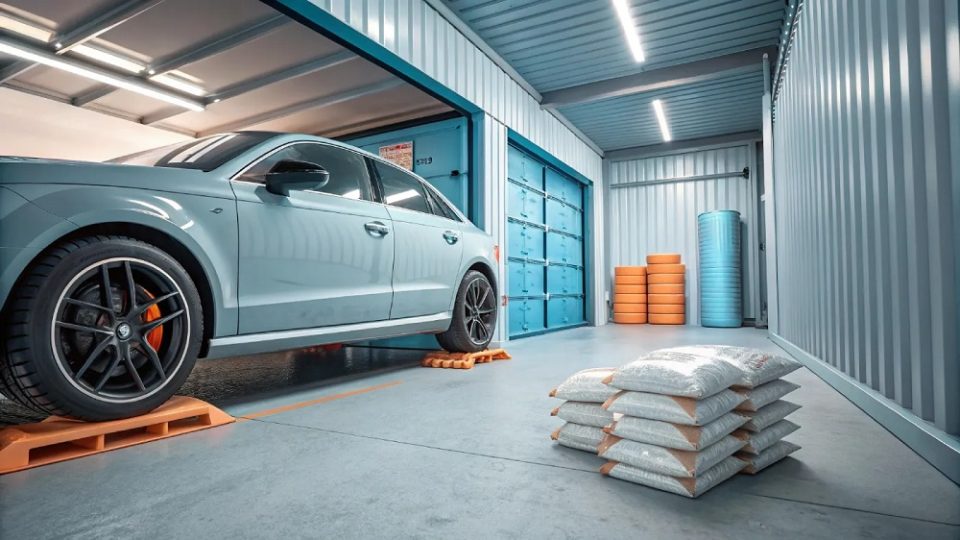
Some vehicle owners use tire cradles or jack stands to reduce stress on tires during long term storage.
This approach is common for classic and performance vehicles.
Preventing Moisture and Rust Damage
Moisture control is one of the most important aspects of vehicle storage.
Store in Dry Environments
Dry storage locations reduce corrosion risks and help preserve vehicle materials.
Use Moisture Absorbers
Moisture absorbing products help reduce humidity inside the vehicle cabin and storage area.
Inspect for Leaks
Water leaks can cause mold, rust, and electrical damage.
Drivers should inspect:
- Door seals
- Windows
- Sunroofs
- Trunk seals
Proper sealing helps protect the vehicle interior.
Protecting the Interior During Storage
Interior materials can deteriorate quickly when exposed to heat and sunlight.
Use Sunshades
Sunshades help reduce dashboard and upholstery damage caused by ultraviolet exposure.
Condition Leather Surfaces
Leather seats and trim benefit from conditioning products that prevent cracking and drying.
Keep the Interior Ventilated
Good airflow helps reduce moisture buildup and mold growth.
Maintaining a clean and dry interior protects both comfort and resale value.
Importance of Car Covers
High quality car covers provide additional protection against dust, sunlight, moisture, and scratches.
Indoor Car Covers
Indoor covers help protect vehicles from dust and minor surface damage.
Outdoor Car Covers
Outdoor covers should be:
- Waterproof
- Breathable
- UV resistant
- Securely fitted
Choosing the right cover improves vehicle preservation significantly.
Rodent and Pest Prevention
Stored vehicles may attract rodents and insects seeking shelter.
Pests can damage:
- Wiring
- Insulation
- Upholstery
- Air filters
Preventive measures include:
- Sealing entry points
- Removing food sources
- Using pest deterrents
Regular inspections help identify problems early.
Starting and Driving Stored Vehicles
Vehicles stored for long periods should not simply be started occasionally without proper driving.
Short engine starts without full operation may:
- Increase moisture buildup
- Reduce battery charging effectiveness
- Create exhaust condensation
When possible, vehicles should be driven long enough to reach full operating temperature.
Importance of Regular Inspections During Storage
Even properly stored vehicles require periodic checks.
Regular inspections help identify:
- Fluid leaks
- Tire pressure loss
- Battery condition
- Moisture buildup
- Pest activity
Routine monitoring reduces the risk of long term damage.
Car Storage for Seasonal Vehicles
Many owners store vehicles seasonally due to weather conditions or limited use.
Common seasonal storage examples include:
- Sports cars during winter
- Recreational vehicles
- Convertibles
- Classic automobiles
Seasonal storage preparation helps preserve these vehicles during periods of inactivity.
How Proper Storage Maintains Resale Value
Vehicle condition strongly affects resale value.
Proper storage helps preserve:
- Exterior paint quality
- Interior appearance
- Mechanical reliability
- Service life
Well preserved vehicles often attract higher resale prices and stronger buyer confidence.
Modern Vehicle Technology and Storage Considerations
Modern vehicles contain sensitive electronics and advanced computer systems that require careful storage preparation.
Important systems include:
- Tire pressure monitoring systems
- Navigation systems
- Electronic control modules
- Hybrid and electric vehicle batteries
Modern technology increases the importance of proper battery maintenance and environmental protection.
Future Trends in Vehicle Storage
Several innovations are shaping the future of car storage and preservation.
Smart Battery Maintenance Systems
Advanced battery monitoring systems automatically maintain charge levels during storage.
Climate Controlled Storage Expansion
More storage facilities now offer temperature and humidity controlled environments.
Vehicle Monitoring Applications
Smartphone applications allow owners to monitor vehicle conditions remotely.
Electric Vehicle Storage Solutions
Electric vehicles require specialized storage procedures for battery preservation and charging management.
Conclusion
Proper car storage plays a major role in protecting vehicle condition, preserving performance, and reducing long term maintenance costs. Vehicles exposed to moisture, sunlight, temperature changes, and extended inactivity can develop mechanical, electrical, and cosmetic problems over time.
By preparing vehicles carefully and maintaining suitable storage conditions, owners can protect important systems such as the engine, battery, tires, interior, and paintwork. Simple maintenance practices such as cleaning the vehicle, maintaining tire pressure, protecting the battery, and controlling moisture can significantly extend vehicle lifespan.
As modern vehicles continue becoming more technologically advanced, effective storage practices will remain essential for preserving reliability, safety, and resale value. Vehicle owners who invest time in proper storage preparation can better protect their automobiles and enjoy stronger long term performance.
Frequently Asked Questions
1. Why is proper car storage important
Proper storage helps protect vehicles from rust, battery failure, tire damage, interior deterioration, and other problems caused by inactivity and environmental exposure.
2. How should a vehicle be prepared for long term storage
Important steps include cleaning the vehicle, changing the oil, filling the fuel tank, maintaining the battery, and protecting tires and interior surfaces.
3. Can improper storage damage a car battery
Yes. Long periods of inactivity may cause battery discharge and reduce battery lifespan.
4. Why should tires be maintained during storage
Proper tire maintenance helps prevent flat spots, uneven wear, and structural damage during long periods of inactivity.
5. Are climate controlled storage facilities worth it
Climate controlled storage provides excellent protection against moisture, heat, and humidity, especially for valuable or collectible vehicles.
6. How can moisture damage stored vehicles
Moisture can cause rust, mold growth, electrical damage, and deterioration of interior materials.
7. Should vehicles be started during long term storage
Vehicles should only be started if they can be driven long enough to reach full operating temperature and properly charge the battery.
